Backbone design and traffic engineering
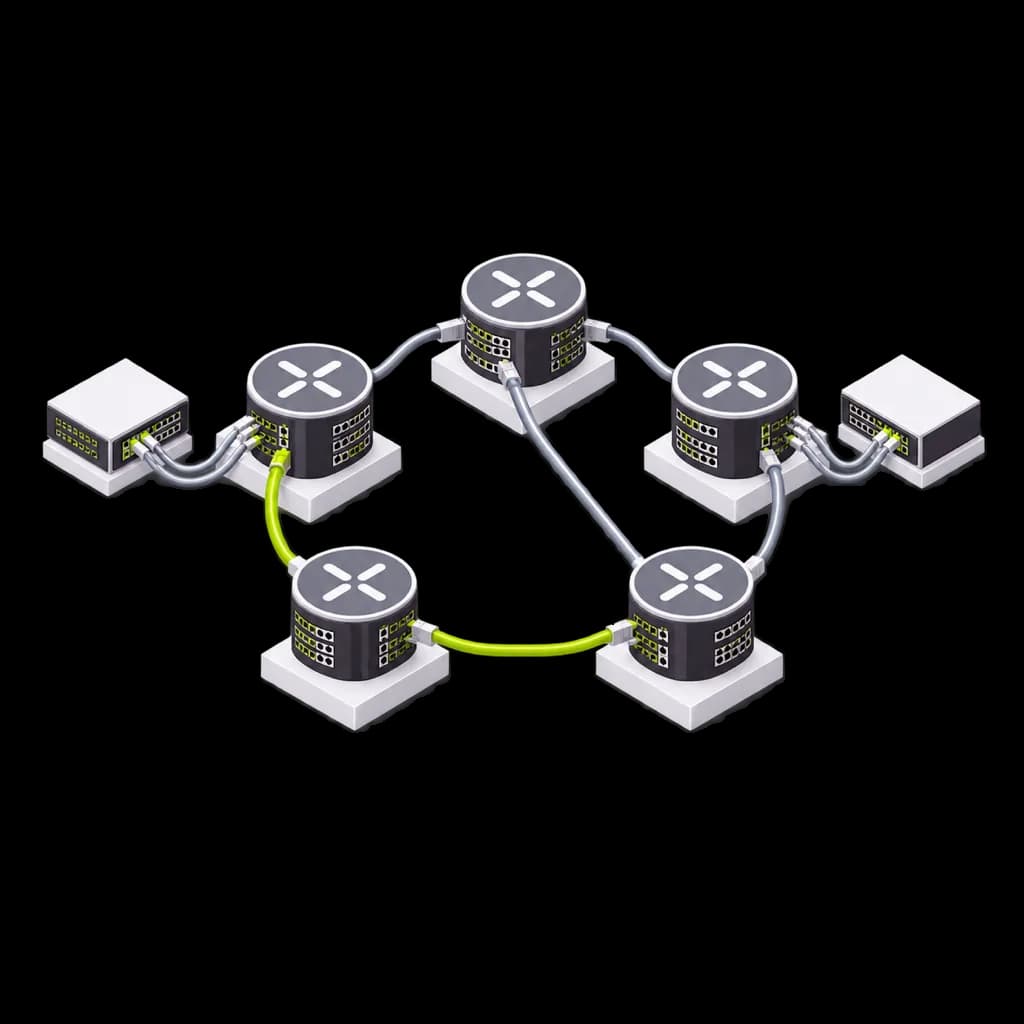
- Traffic from A to C
- Backbone
- Failed link
What usually prompts the call
- One link saturating at busy hour while parallel paths have room
- Nobody sure what happens if a particular cable or router fails
- IGP metrics set years ago by people who have since left
- Capacity bought where traffic is today, not where it goes after a failure
- An MPLS core that’s hard to operate, or a segment-routing migration that keeps slipping
What we do
Start from the routers
A read-only collector builds the topology, links and IGP adjacencies from the routers themselves, so the model matches the network rather than the last diagram.
Estimate the traffic matrix
From interface counters you already collect, or from flow data where you have it. The estimate is checked against links held back from the fit.
Simulate every failure
Every single cable, router and LAG-member failure at busy hour, with ECMP, and the links each one would overload.
Change one metric at a time
Only changes that improve normal operation and don’t make any simulated failure worse go into the plan, each with a rollback.
What you get
- A traffic matrix and a topology model of your backbone
- A failure report: which failures overload which links
- A metric plan to apply one change at a time
- MPLS or segment-routing designs, with TI-LFA and Flex-Algo where they pay off
Technologies
- OSPF
- IS-IS
- ECMP
- BGP-LS
- MPLS (LDP, RSVP-TE)
- segment routing
- TI-LFA
- Flex-Algo
- Juniper
- Arista
- OcNOS
Related case studies
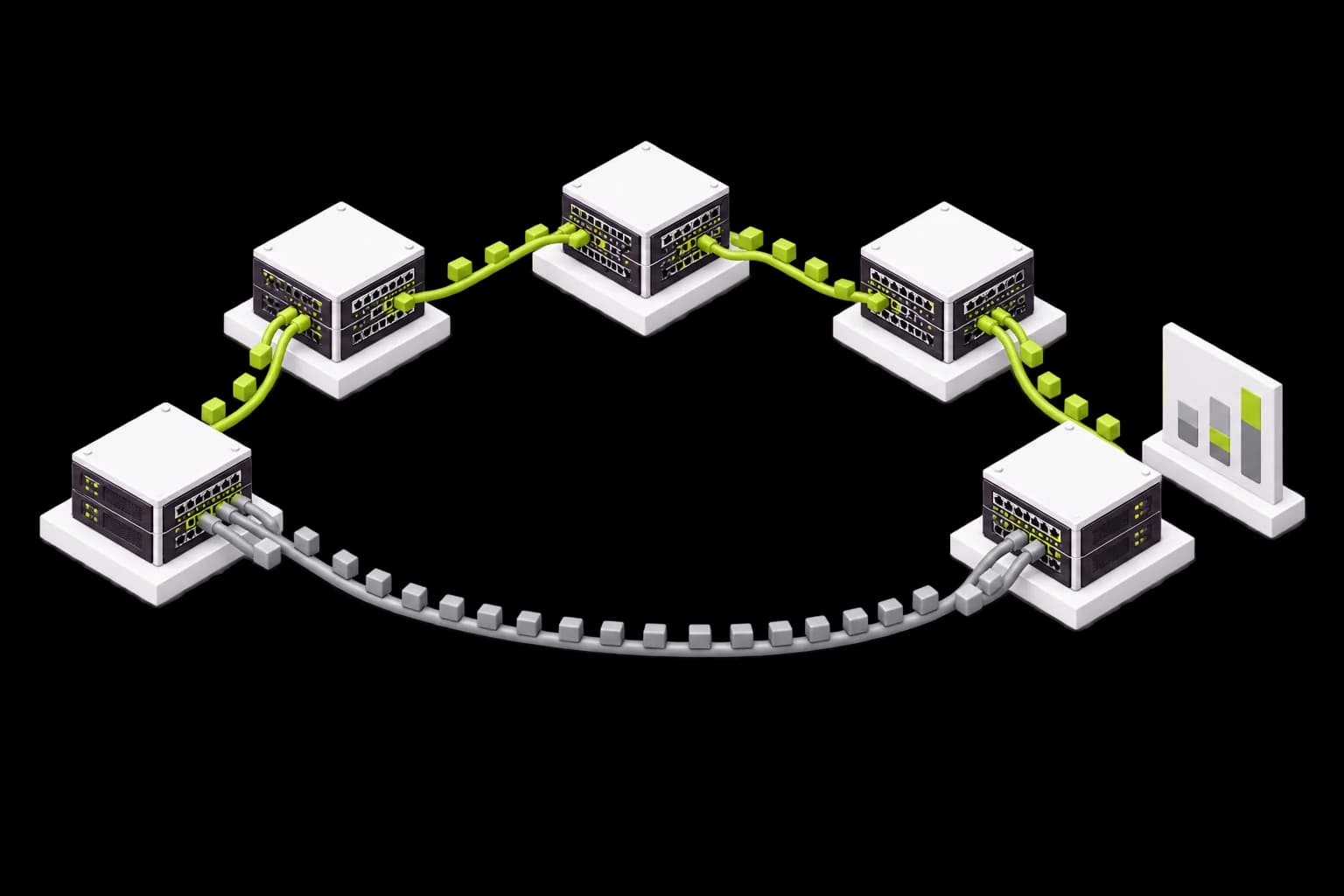
Failure simulation and a metric plan for a busy backbone
Client: Transit carrier
Outcome: Metric changes ranked and checked against link and router failures, then applied to the network.
Questions
Do we need a commercial traffic-engineering tool?
No. Interface counters and a model of your topology are enough to start. Corepath, our own platform, does this continuously if you want it to.
Will you change metrics on our live network?
Only one at a time, in your change windows, with your engineers, and with the rollback written down before we start.
Start with the review.
Configs and two weeks of flow data are enough for us to tell you what we’d change first.